Where the name comes from
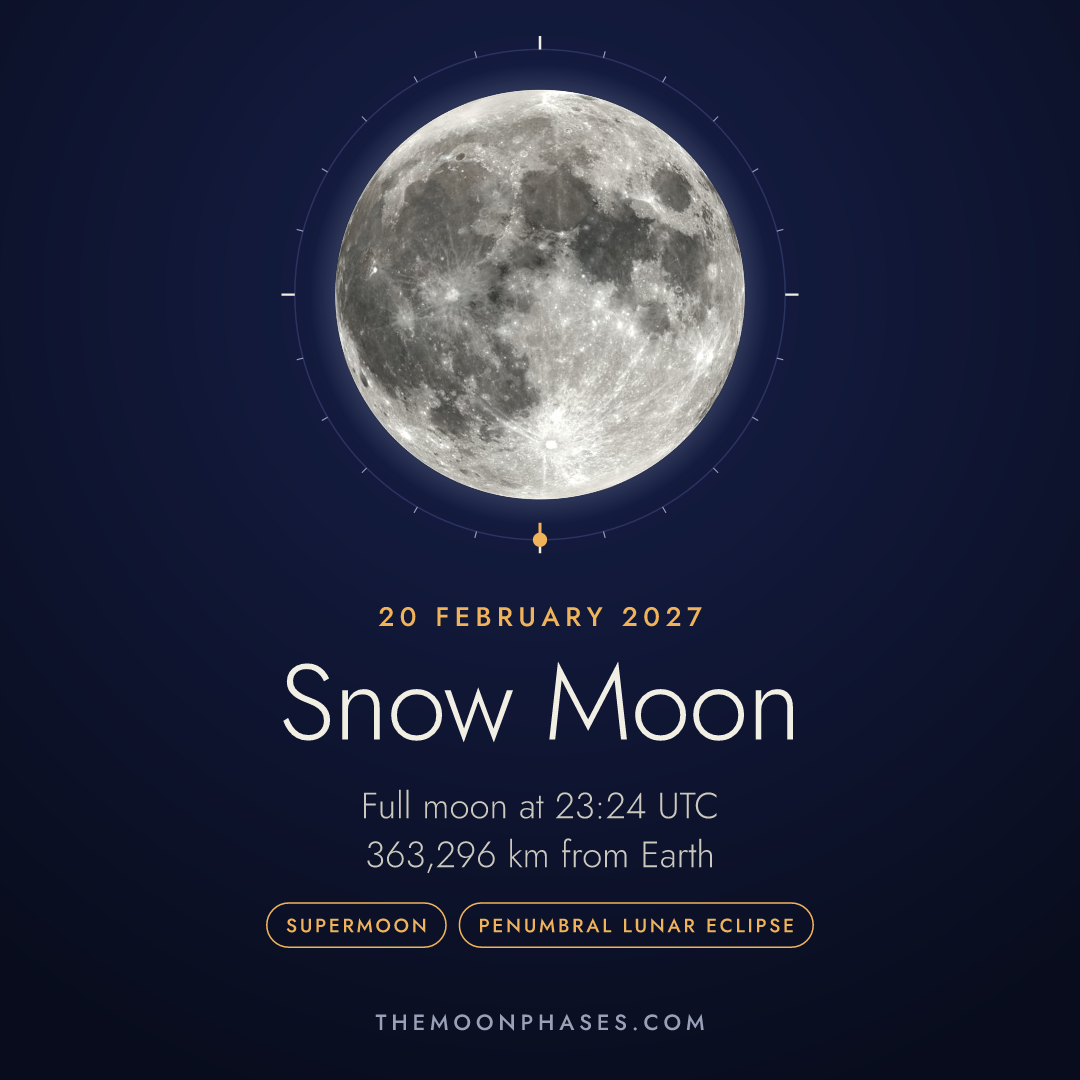
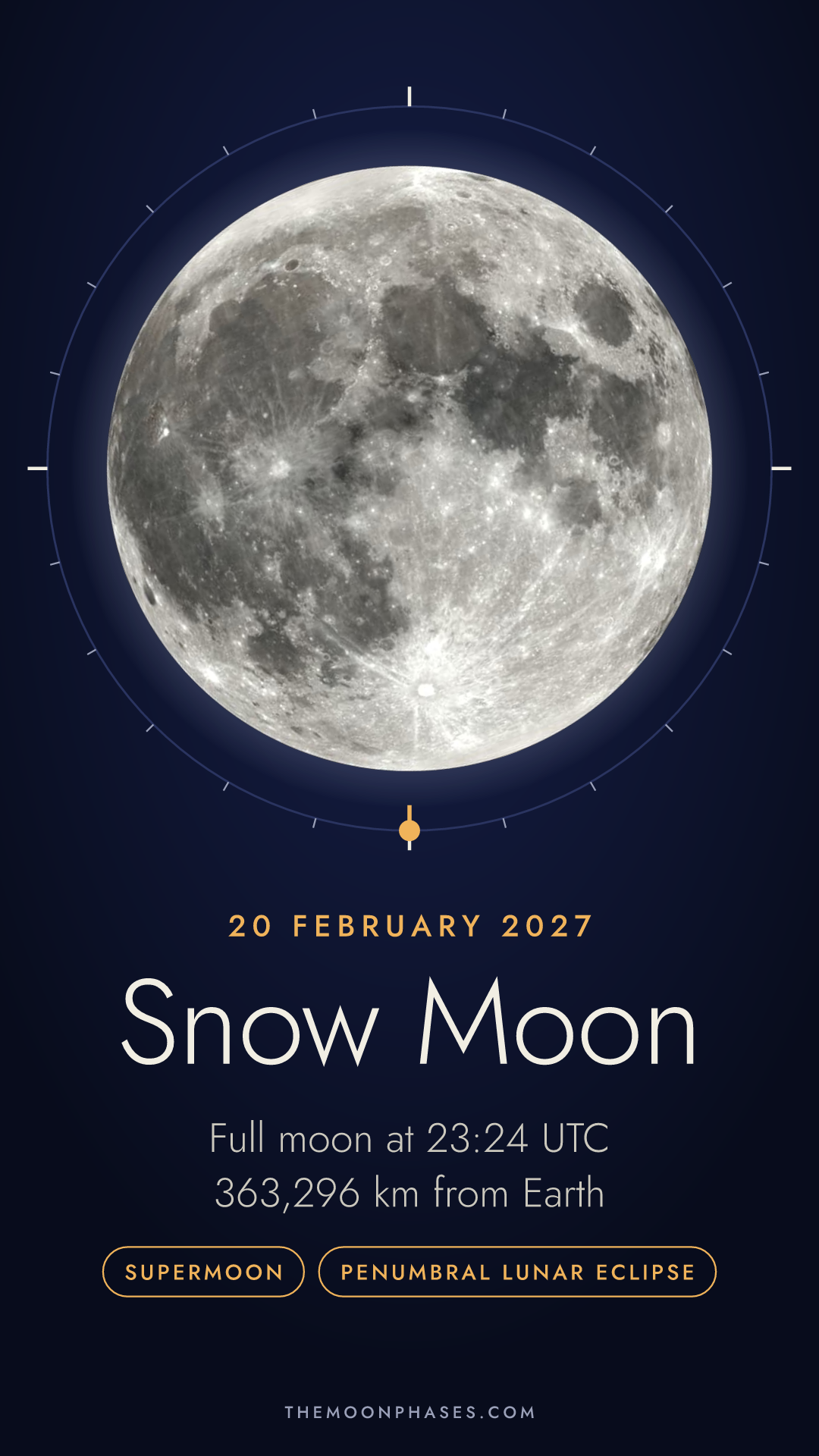
February is, on average, the snowiest month across much of the north-eastern United States, and the name records that plainly. Captain Jonathan Carver, travelling in the 1760s, recorded a Snow Moon among the Dakota because more snow fell in that month than in any other of the winter.
The companion name Hunger Moon points at the same season from the other side: deep snow made hunting hard and stored food ran low.
What to look for
Because February has 28 days and a lunation lasts about 29.5, February occasionally has no full moon at all. It happened in 2018 and happens next in 2037 (in UTC). January and March then each have two.
Other names for this moon
- Hunger Moon
- Storm Moon
- Bear Moon (Ojibwe)
- Bald Eagle Moon (Cree)
- Bony Moon (Cherokee)
Names in brackets show the nation or language a name is recorded from. Calendars varied between communities, and many nations named thirteen moons, not twelve.
Upcoming dates
| Year | Date and time | Distance |
|---|---|---|
| 2027 Supermoon penumbral eclipse | 363,296 km | |
| 2028 Supermoon | 356,711 km | |
| 2029 Supermoon | 359,648 km | |
| 2030 | 376,414 km | |
| 2031 | 397,291 km | |
| 2032 | 403,996 km |
Named by the calendar month of the full moon in UTC. In time zones far from Greenwich a full moon near the start or end of a month can fall in the neighbouring month.