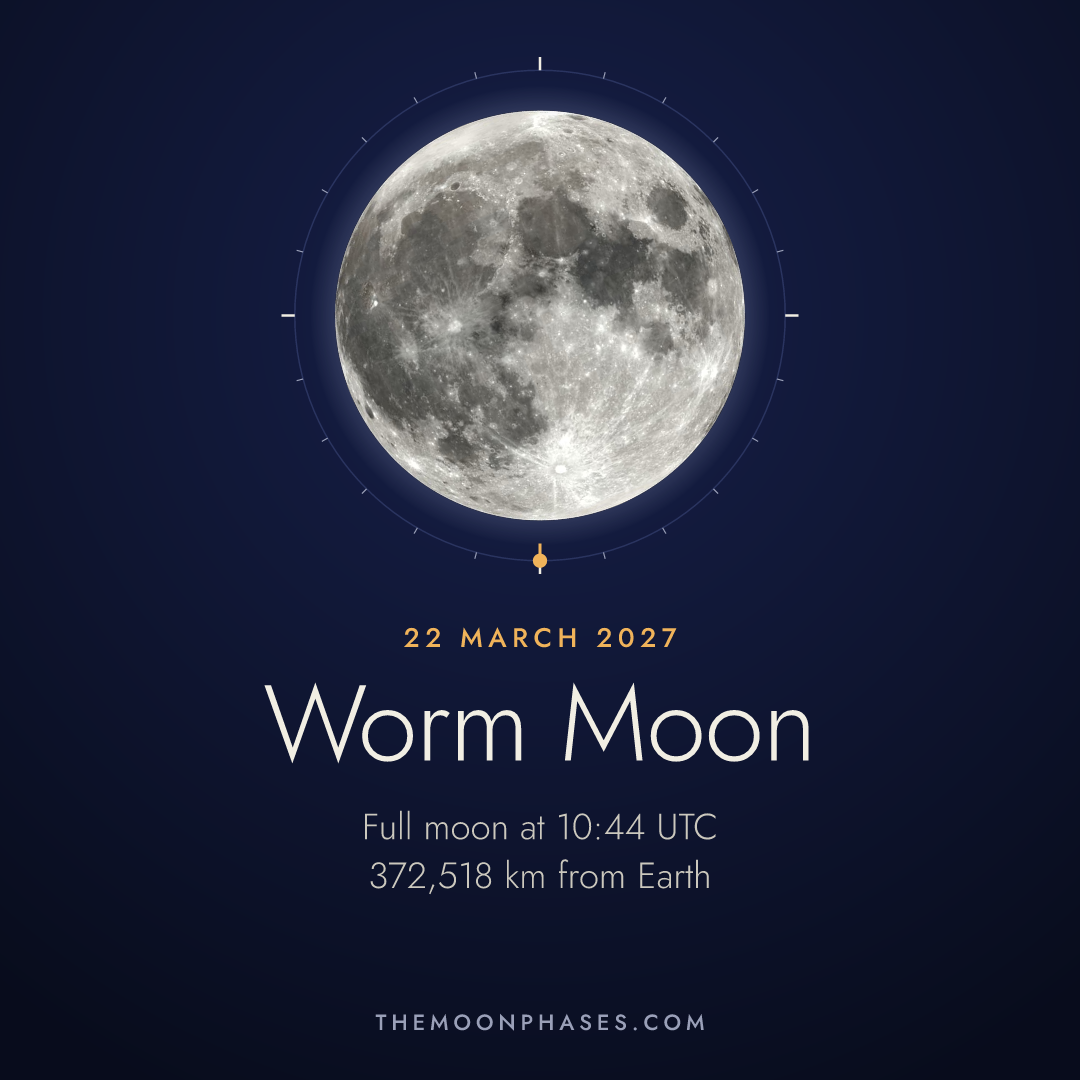
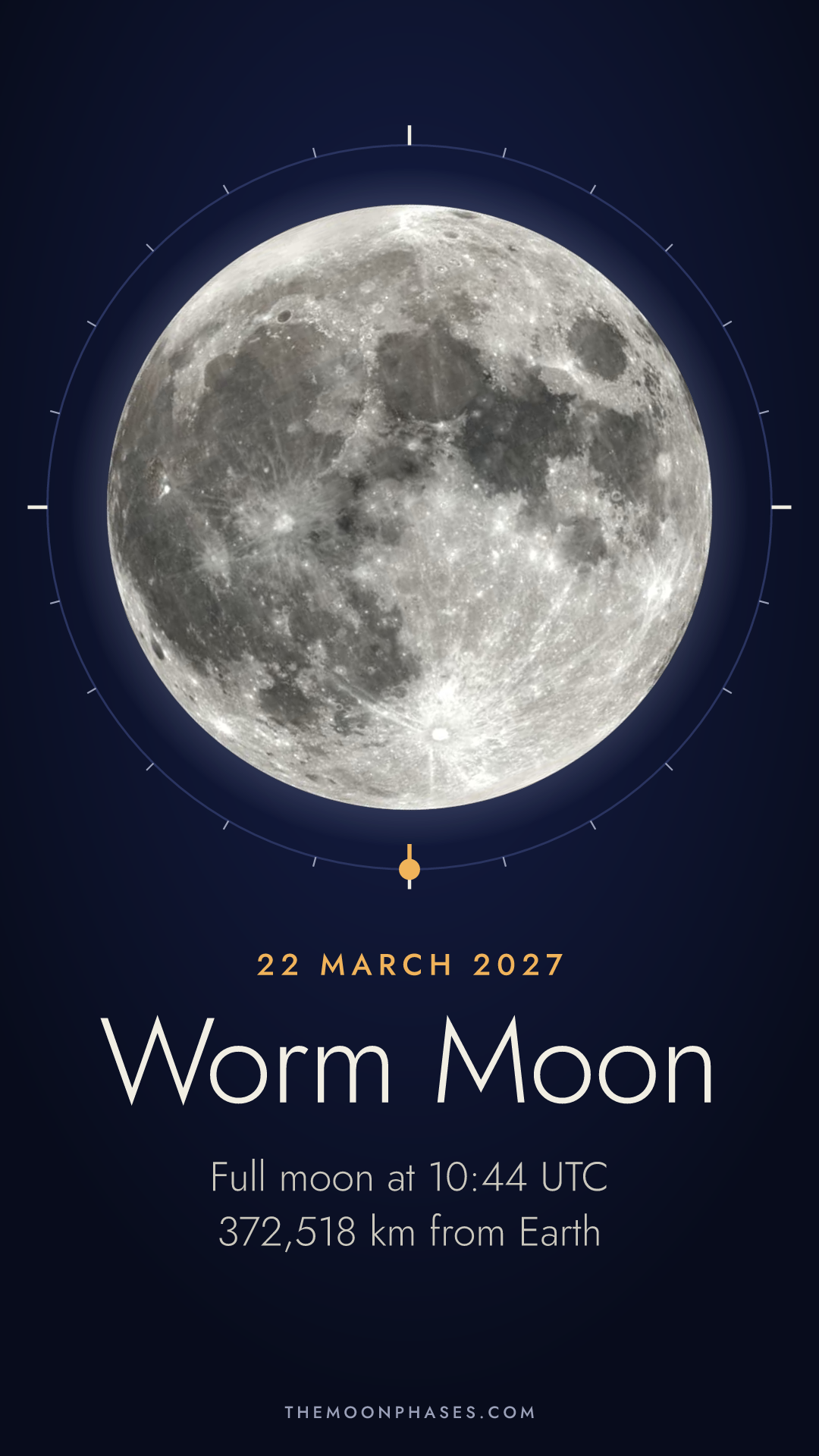
Where the name comes from
The usual account is earthworms surfacing as the soil thaws, which brings robins back. Carver's eighteenth-century journal gives a different reading: the worms were beetle larvae emerging from the bark of trees as winter loosened its hold.
Sap Moon and Sugar Moon mark the same weeks by a different event, the running of maple sap. In the Christian calendar, the last full moon of winter is the Lenten Moon.
What to look for
The first full moon on or after the March equinox is the Paschal Full Moon, and Easter in the Western churches is the following Sunday. The church uses a tabular moon and a fixed 21 March equinox, so its dates occasionally differ from the astronomical ones.
Other names for this moon
- Sap Moon
- Sugar Moon (Ojibwe)
- Crow Moon
- Crust Moon
- Lenten Moon
Names in brackets show the nation or language a name is recorded from. Calendars varied between communities, and many nations named thirteen moons, not twelve.
Upcoming dates
| Year | Date and time | Distance |
|---|---|---|
| 2027 | 372,518 km | |
| 2028 Supermoon | 358,061 km | |
| 2029 Supermoon | 356,670 km | |
| 2030 Supermoon | 366,434 km | |
| 2031 | 387,013 km | |
| 2032 | 396,620 km |
Named by the calendar month of the full moon in UTC. In time zones far from Greenwich a full moon near the start or end of a month can fall in the neighbouring month.