Where the name comes from
The name is usually explained by wolf packs howling near villages in the depth of winter. The older idea that they howled from hunger is folklore: wolves howl to mark territory, find pack members and coordinate hunts, and they are simply easier to hear across frozen, leafless country.
In medieval England the full moon after the winter solstice was the Moon After Yule. The Wolf Moon label reached most readers through twentieth-century American almanacs, which credited it to Algonquian peoples without naming a specific nation.
What to look for
January full moons ride very high in northern skies. The full moon sits opposite the Sun, so when the winter Sun is low, the Moon takes the high summer path and stays up for fourteen hours or more.
Other names for this moon
- Moon After Yule
- Old Moon
- Ice Moon
- Center Moon (Assiniboine)
- Cold Moon (Cree)
Names in brackets show the nation or language a name is recorded from. Calendars varied between communities, and many nations named thirteen moons, not twelve.
Upcoming dates
| Year | Date and time | Distance |
|---|---|---|
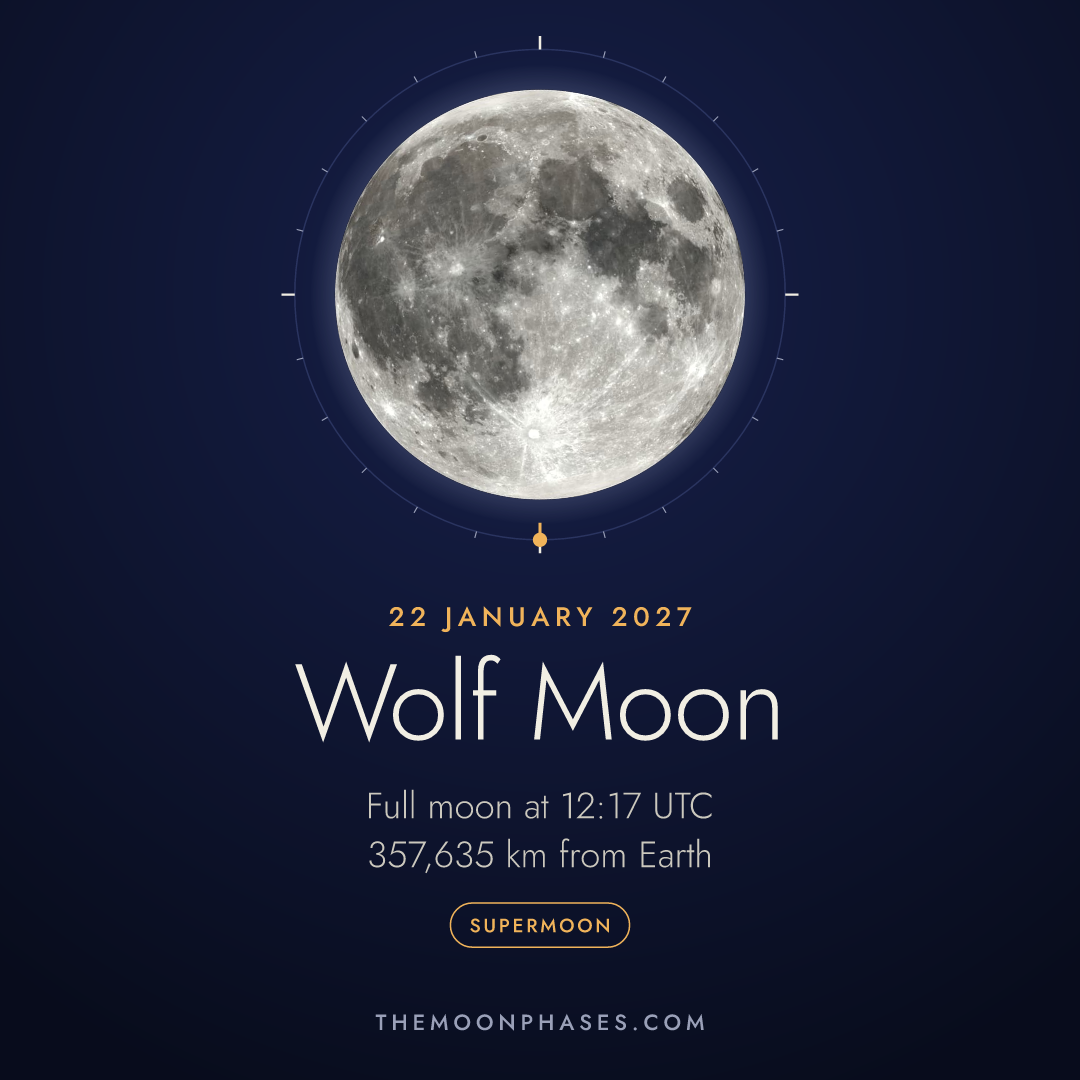
| 2027 Supermoon | 357,635 km | |
| 2028 Supermoon partial eclipse | 360,257 km | |
| 2029 Supermoon | 367,036 km | |
| 2030 | 387,798 km | |
| 2031 | 404,347 km | |
| 2032 | 406,514 km |
Named by the calendar month of the full moon in UTC. In time zones far from Greenwich a full moon near the start or end of a month can fall in the neighbouring month.