Elongation 180° to 270° · 100% to 50% lit
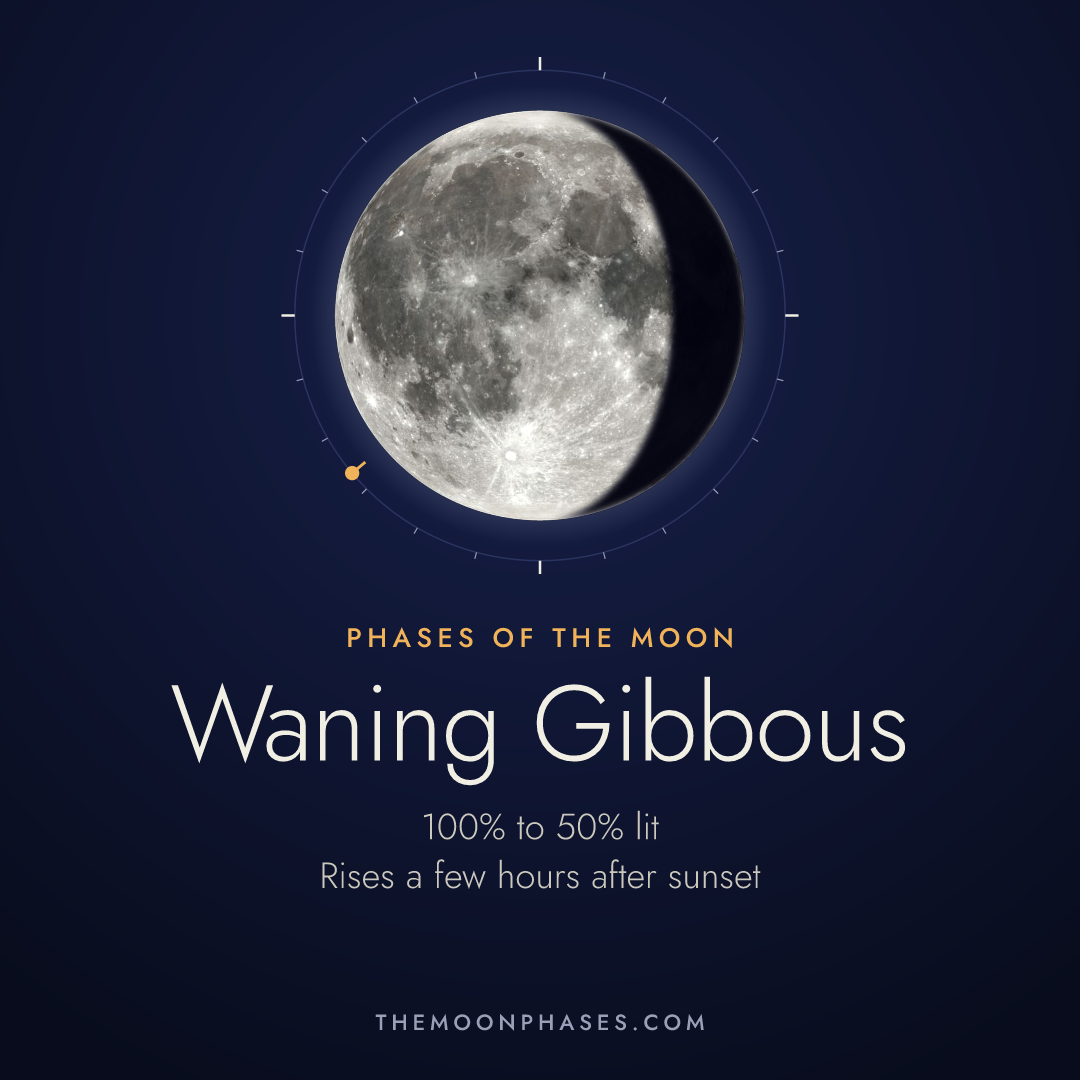
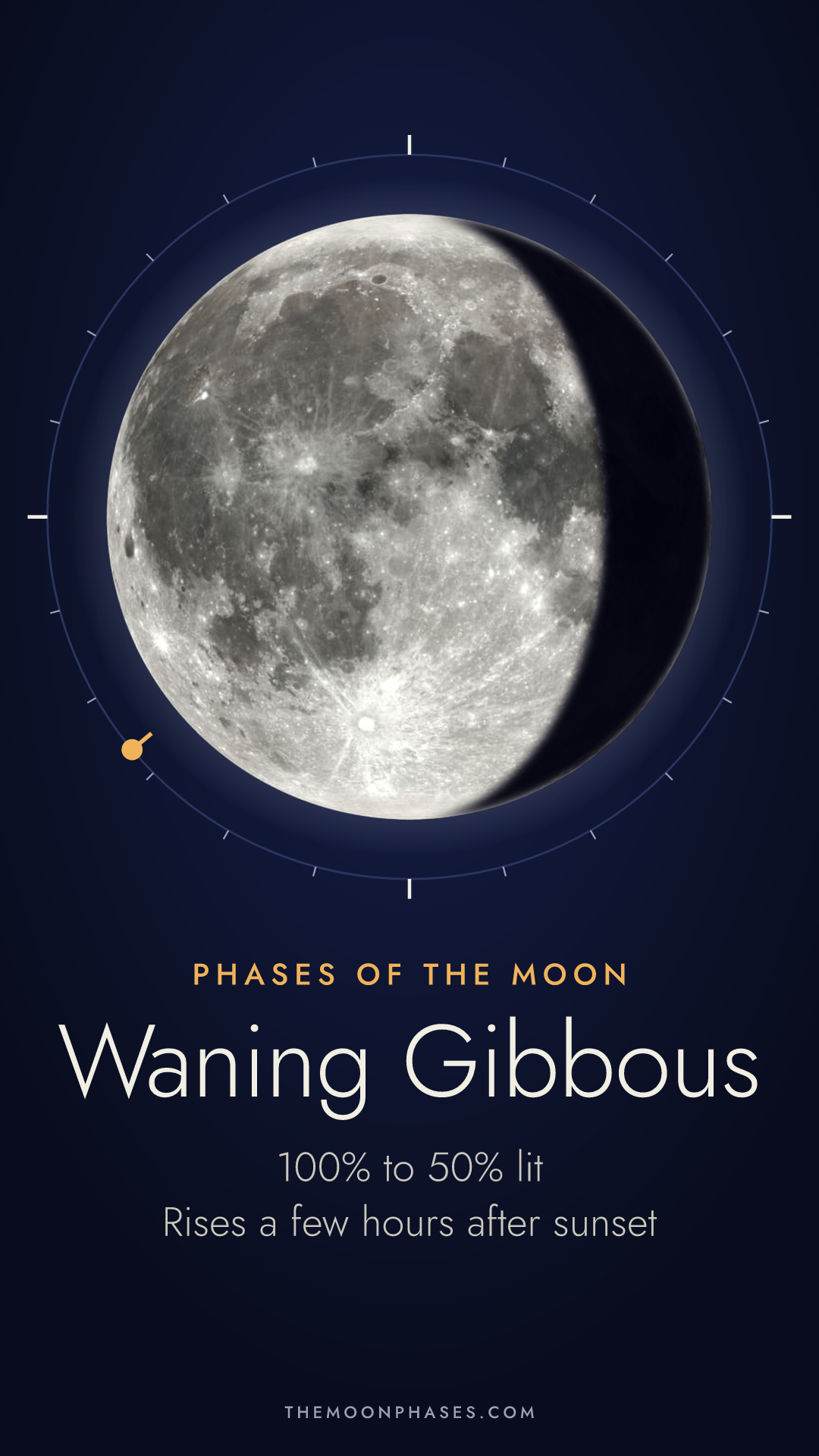
Waning Gibbous
Past full and shrinking, now lit on the opposite side. It rises later each evening.
- Rises
- A few hours after sunset
- Highest
- Before dawn
- Sets
- Mid-morning
Typical times at mid-latitudes. Best seen: late evening to morning. For exact times, pick your city.
What is happening
After full the terminator returns, this time as a line of lunar sunset creeping across the disc from the side that was lit first.
The waning gibbous moon rises well after dark and is still up in the western sky after sunrise, which is why so many people notice the Moon in the morning on their way to work or school.
Worth knowing
Features you saw at lunar sunrise two weeks earlier are now lit from the other direction. Crater walls that were in shadow are bright, and the view of familiar ground changes completely.