Where the name comes from
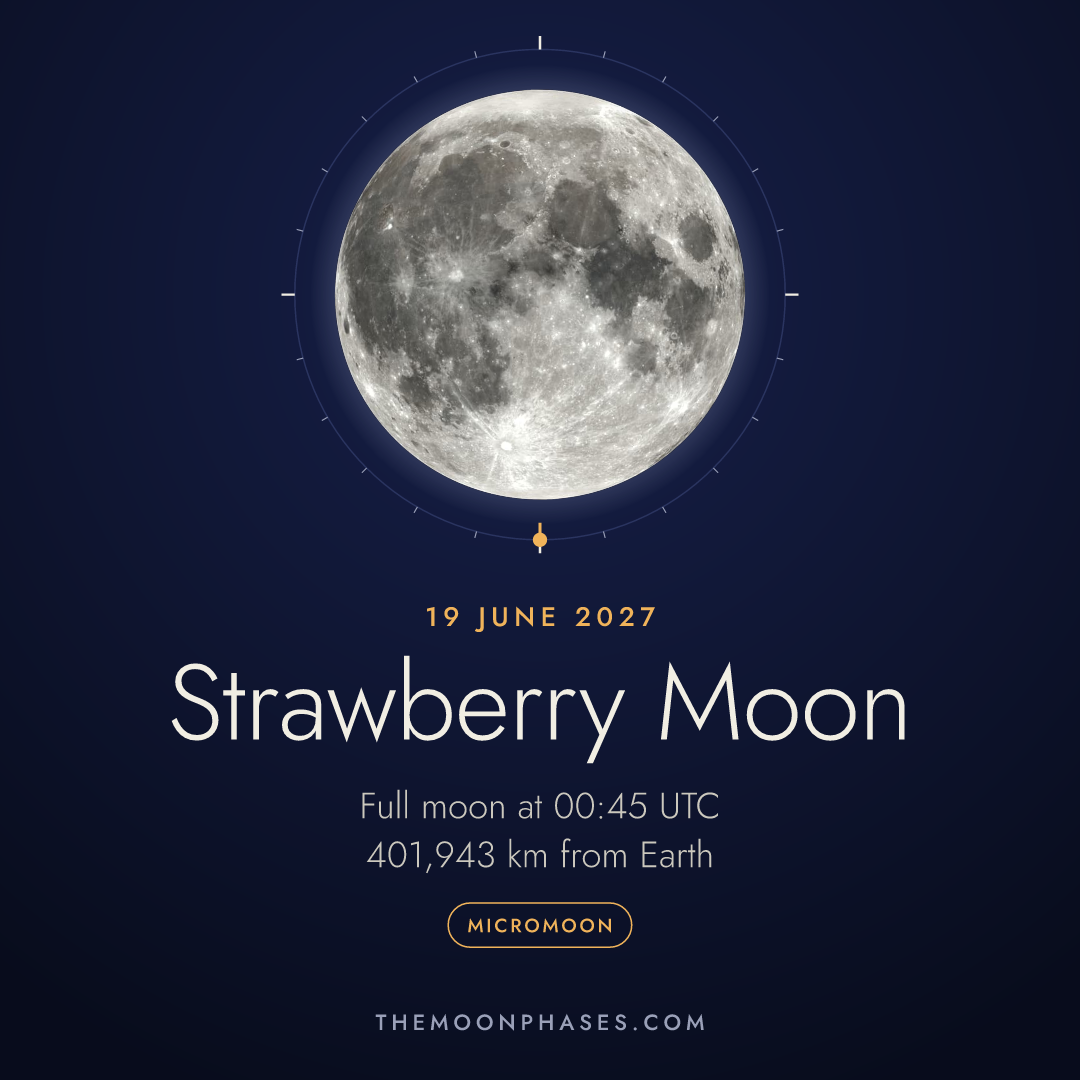
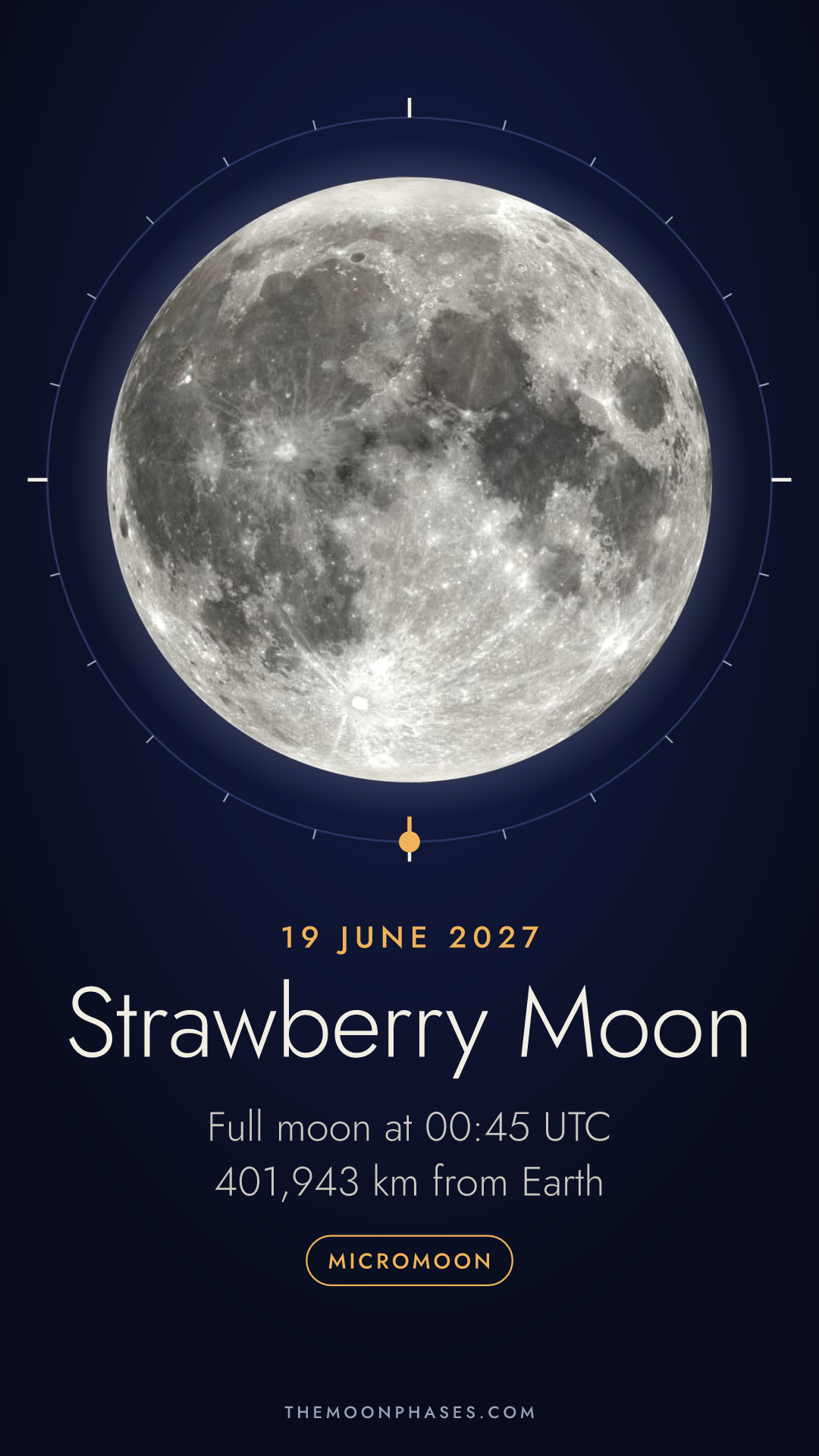
This is one of the better-attested names: Algonquin, Ojibwe, Dakota and Lakota peoples all used a strawberry name for the lunation in which wild strawberries ripen.
In Europe this was the Rose Moon, Mead Moon or Honey Moon. A link between a June honey moon and wedding honeymoons is often claimed and is not well supported by the word's recorded history.
What to look for
This is the lowest full moon of the year for northern observers, and the highest for southern ones. Around a major lunar standstill, as in 2024 to 2025, it runs lower still.
Other names for this moon
- Rose Moon
- Honey Moon
- Mead Moon
- Hot Moon
- Berries Ripen Moon (Haida)
Names in brackets show the nation or language a name is recorded from. Calendars varied between communities, and many nations named thirteen moons, not twelve.
Upcoming dates
| Year | Date and time | Distance |
|---|---|---|
| 2027 | 401,943 km | |
| 2028 | 383,565 km | |
| 2029 total eclipse | 373,263 km | |
| 2030 Supermoon partial eclipse | 358,772 km | |
| 2031 Supermoon penumbral eclipse | 359,666 km | |
| 2032 Supermoon | 366,020 km |
Named by the calendar month of the full moon in UTC. In time zones far from Greenwich a full moon near the start or end of a month can fall in the neighbouring month.